
Showing posts with label Ramparts magazine. Show all posts
Showing posts with label Ramparts magazine. Show all posts
Friday, March 01, 2024
Review of New Ralph Gleason Bio


Wednesday, January 26, 2022
Savage Journey at City Lights

Last night we also discussed Warren Hinckle, and I wanted to add his face to the gallery of Hunter Thompson's super editors.
Friday, January 14, 2022
Bob Scheer on Hunter S. Thompson

Friday, August 16, 2019
Media Roundup: Manson, Arnautoff, McWilliams & Ramparts
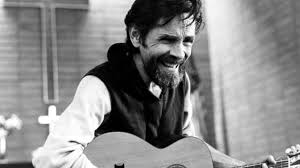
The project with the longest gestation period was a documentary film called Manson: Music From An Unsound Mind. It explores the musical aspirations that brought Charles Manson to Los Angeles with disastrous results. Before that, Manson lived in San Francisco, and the film includes some of my comments about the San Francisco counterculture. I watched the film on iTunes, but it's available on many other platforms.
The same crew (Prism Films) is also releasing a documentary about Altamont. I'm not sure about the release date but wouldn't be surprised if it lands in December, which is the concert's 50th anniversary. We did both interviews here at the house on the same day.
I also talked with Robert Scheer about Carey McWilliams and Ramparts magazine on his KCRW podcast. Over the years, Bob and I have talked extensively about Ramparts and his work there; this time it was especially gratifying to blend those reflections with some discussion of McWilliams and his achievement, especially but not only at The Nation magazine.
Finally, my continuing interest in Victor Arnautoff's murals at George Washington High School led to an interview with Christoph Droesser, who produced a piece for Swiss radio and a front-page article for Frankfurter Allgemeine. I continue to follow the larger story with interest and am glad the San Francisco school board has reconsidered its decision to destroy those murals. I learned about the issue from my colleague, Bob Cherny, who wrote a 2017 book about Arnautoff. I was alarmed by the board's claim that the murals glorified slavery and genocide. The opposite is true, but the claim seemed to justify the destruction. To my knowledge, no one has actually withdrawn that claim. We'll see where that goes from here.
Sunday, July 28, 2019
John Fogerty's "Fortunate Son"

Even more unexpected was Fogerty's connection to Winters, one of my favorite small towns, about 13 miles west of Davis. His family spent many summers on Putah Creek before it was dammed to create Lake Berryesa. That creek later inspired "Green River."
As for his musical influences, Fogerty is equally specific. Most notable for me are the R&B radio stations, especially KWBR (later KDIA), which broadcast out of Oakland. The folk festivals at UC Berkeley, where Fogerty met Lightnin' Hopkins and Pete Seeger, also left their mark. At the Oakland Auditorium, he saw James Brown, Jackie Wilson, Duane Eddy, and Ray Charles from the front row.
Fogerty learned about Fantasy Records, then based in San Francisco, from a public television special hosted by Ralph Gleason, the jazz critic at the San Francisco Chronicle who also wrote for Ramparts and cofounded Rolling Stone magazine. Fogerty's longstanding beef with Fantasy (and his bandmates) takes up a good deal of the book. I found it interesting that Gleason, a vice president at Fantasy, evidently sided with Saul Zaentz, Fantasy's owner and Fogerty's nemesis. Lawyer Al Bendich, who famously defended Lenny Bruce in his San Francisco obscenity trial, also worked for Fantasy and plays one of the heavies.
Interestingly, Fogerty didn't identify with the San Francisco counterculture. He wasn't a creature of the drug culture, he avoided Dead-style jamming and improvisation, and he didn't appreciate the casual approach to live performance, especially extended tuning before the set actually started. He's a self-described control freak, and the studio has long been his domain. From the outset, he thought long and hard not only about the music, but also about the finished record.
The memoir loses shape and direction toward the end, when it becomes more of a family album. But the wealth of local detail, the deep dive into musical influences, and Fogerty's amazing run as a singer/songwriter made this a very worthwhile read for me.
Sunday, February 11, 2018
Ransoming Pagan Babies

Maybe we can fill in some of those gaps at the Bay Area Book Festival. I'll moderate a panel that features this book and Who Killed Hunter S. Thompson? The panelists will be Robert Scheer, Steve Wasserman, and Ron Turner. Bob worked with Warren at Ramparts magazine, Steve published (and co-edited) Ransoming Pagan Babies, and Ron Turner published Who Killed Hunter S. Thompson? at Last Gasp Books.
The festival will be held April 28-29 in downtown Berkeley.
Monday, December 04, 2017
Rolling Stone and Ramparts

A week before that anniversary, an outfit called The Conversation asked me to lash together 1,000 words on the link between Ramparts and Rolling Stone. Here's the piece, which I was happy to do. I also have a forthcoming article for California magazine that traces the links between Rolling Stone and the University of California, Berkeley, where Jann and many of the early writers and editors studied. I'll post that when it appears.
The Conversation, by the way, is like a wire service for academics writing for general audiences. They pushed out the article to news outlets, and the piece was picked up by Salon, the Chicago Tribune, San Francisco Chronicle, and scores of smaller outlets. They also provided me with metrics--my own dashboard, in fact--that showed that Salon was by far the biggest pickup. About one-third of the total audience came from that one outlet.
Monday, May 15, 2017
SF State Now Flying Its Freak Flag

David Talbot & the Bay Area Book Festival

Thursday, September 08, 2016
Warren J. Hinckle III, 1938-2016

In my Truthdig article and when speaking to the press, I tried to put across how extraordinary Ramparts magazine was under Warren's direction. And I made sure to note that Warren made American journalistic history at least twice: once for leading Ramparts, and then again for pairing Hunter S. Thompson with illustrator Ralph Steadman, thereby birthing Gonzo journalism. Warren published their article on the Kentucky Derby in 1970; after Scanlan's tanked, Jann Wenner recruited the two for Rolling Stone, which was founded by Jann and Ralph J. Gleason, both Ramparts alumni.
I learned a lot about Warren's post-Ramparts life by reading the coverage and going to his vigil and rosary. But as colorful as that life was, his work at Ramparts was his most significant professional contribution. His showmanship, combined with Bob Scheer's political smarts and Dugald Stermer's flair for design, was the key to Ramparts' success. Bob went on to a long career at the Los Angeles Times and now Truthdig, and Dugald taught and continued to produce important work. But that combination (Hinckle, Scheer, and Stermer) was greater than the sum of its parts.
Monday, March 30, 2015
Ramparts in the News

One review that caught my eye appeared in The Weekly Standard. It's by Gabriel Schoenfeld, who has argued elsewhere that New York Times editors and writers should be prosecuted under the Espionage Act for their stories on massive U.S. surveillance programs. He also wrote a book called Necessary Secrets, which "offers a gripping account of how our national security ... has been compromised by disclosure of classified information."
Schoenfeld's review performs a kind of ideological minuet. Much of that performance hinges on its diction, misdirection, and suggestion. The organizing logic is melodrama. The violence of the Second World War, which Schoenfeld mentions in the first sentence, justifies the CIA's overreach during the Cold War that followed. He also refers to the CIA's "Cold War liberals," suggesting that they dominated the agency during the 1950s. This would come as a surprise to Allen Dulles, the lifelong Republican whom President Eisenhower appointed director of the CIA in 1952. After Dulles choreographed coups in Iran and Guatemala as well as the disastrous Bay of Pigs invasion in Cuba, President Kennedy pressured him to resign in 1961.
Schoenfeld concedes that "the CIA link to the NSA—and a number of other domestic and foreign organizations—continued well past the point of usefulness." He also notes that "CIA astigmatism should be condemned." Note the passive voice--who, exactly, would do that work, especially if journalists are prosecuted for stories on classified programs? The review says nothing about the CIA's illicit investigations of those journalists or its plans to target them. The diction, too, is designed to minimize the agency's culpability. The agency suffered from astigmatism, or slightly faulty vision. If it had the correct prescription, perhaps it wouldn't have tried to assassinate Fidel Castro eight times between 1960 and 1965. Or maybe it would have succeeded.
That's as far as Dr. Schoenfeld can go toward criticizing the agency during this period. He saves his real criticisms for Paget's "preposterous judgments" about the agency and its efforts. He cites exactly one but assures us that they are scattered throughout the book. I will withhold judgment on that, but the review's selection and emphasis suggest that Dr. Schoenfeld might not be a reliable guide on these points.
Wednesday, September 19, 2012
Mother Jones's Mitt Romney Story

Although Ramparts magazine, from which Mother Jones sprang, isn't mentioned, I recalled Adam Hochschild's comment about its formula for success: "Find an expose that major newspapers are afraid to touch, publish it with a big enough splash that they can't afford to ignore it ... and then publicize it in a way that plays the press off against each other."
I was surprised that the Times thought its own readers would need that much background information on Mother Jones, which has been around since the mid-1970s. Interesting, too, that the article quotes Markos Moulitsas, founder of Daily Kos and our author at PoliPointPress.
Nicholas Lemann's remark about Mother Jones is also instructive. Lemann, dean of Columbia University's graduate school of journalism, said it helped that "Mother Jones seems to live in a zone where it’s respected. It’s obviously ideological. But it’s respected."
I don't want to get too fussy about this quote, which was almost certainly part of some larger point. And yes, it's important to note that Mother Jones is respected. But I really do wonder who's NOT ideological in Lemann's sense. Only news organizations that maximize profit for shareholders? Or that subset plus the BBC and minus Fox News? In far too many discussions of the media, the ideology of the modern media corporation doesn't count as an ideology at all.
Wednesday, August 22, 2012
Subversives ... and Richard Aoki

Some readers may find a comparison of the reviews instructive, especially when it comes to the importance of selection and emphasis. My review focuses heavily on what I take to be the book's central story: the relationship between Ronald Reagan and the FBI under J. Edgar Hoover. The book clearly invites that reading. For example, Reagan's name appears in the subtitle, and Seth concludes the book by detailing the FBI's stubborn refusal to release the files that document its relationship with Reagan. That Seth was able to land those documents through a series of lawsuits is a major part of his contribution.
Sol acknowledges that the Reagan-FBI story contains the book's "most significant historical revelations," but he devotes relatively little space to, and offers almost no details about, those revelations in his review. He's more interested in the book's treatment of Mario Savio and the radical nature of the student protests. That emphasis assorts well with a more general argument Sol has been making in various forums over the years.
Interestingly, Sol also passes on what has proven to be a very controversial aspect of the book: its claim that Richard Aoki, a former Black Panther, was also an FBI informer. Seth released that story separately through the Center for Investigative Reporting this week, and it got a lot of pickup. The story hit a nerve, especially among activists and academics interested in race and ethnicity, and some of the most vocal early responders were deeply skeptical or dismissive--reflexively so, in my opinion. One way to evaluate that opinion is to perform what Stanley Crouch used to call the flip test. If someone brought similar evidence against Reagan or Hoover, for example, would the claim be accepted or rejected?
Readers of a certain age may recall the 1978 New West piece on the Panthers by Kate Coleman and Paul Avery. That one was also sponsored by CIR and received a great deal of attention. (I discuss it in the Ramparts book.)
Monday, December 12, 2011
On the Ground
 Last week I heard from Sean Stewart, the editor of a new book on the sixties underground press called On the Ground. It joins John McMillian's recent Smoking Typewriters and its precursor, Abe Peck's Uncovering the Sixties, in reviewing the rise and fall of the underground press.
On the Ground complements those books superbly and succeeds on its own as well. Unlike them, it's studded with clips, ads, photographs, and spreads from the Berkeley Barb, San Francisco Oracle, The Black Panther, the San Francisco Express Times, and many other publications. (I've picked the California-based ones, but Sean's focus is national.)
The text features direct testimony from those who founded, contributed to, read, and otherwise helped keep these newspapers alive. We hear from John Sinclair (White Panthers), Paul Krassner (The Realist), Art Kunkin (LA Free Press), Abe Peck, Judy Gumbo Stewart (Berkeley Barb), Bill Ayers, Emory Douglas (The Black Panther), and many others.
The artists include R. Crumb, Art Spiegelman, Gilbert Shelton (Fabulous Furry Freak Brothers), and Bruce Conner, who produced a cover for the San Francisco Oracle. As part of my Grateful Dead research, I'm learning more about both Conner and the Oracle, but I didn't know they were connected.
Sean gives us a minimal structure: ten chapters that a) describe how the work got done and b) track the fortunes of the genre. The headline version is that they got a lot of free stuff from sympathizers, sold a lot of sex ads, used photo-offset printing, worked with the goodfellas who ran (still run?) newsstand distribution, coped with various forms of internal and external strife, got a little carried away toward the end, and finally moved on to other forms of activism and professional life. (Sean concludes with a helpful "where are they now?" section.)
Between the art and the first-person accounts, On the Ground is above all immediate. It allows you to sample the publications, read the insiders' anecdotes, and make up your own mind about these publications.
If you've had your snout in Ramparts for the last few years, you'll see many familiar names. Paul Krassner, of course, was that magazine's "society editor." Jeffrey Blankfort's photographs accompanied its coverage of the Democratic National Convention in 1968, and several of his photos appear in my book. Judy Albert got her nickname from Eldridge Cleaver when he was on the Ramparts masthead. Ron Turner of Last Gasp will publish Warren Hinckle's forthcoming book on Hunter Thompson.
(Of course, fanatical readers of this blog will recall that I don't regard Ramparts as an underground publication. The whole point was that it invited comparison with Time, Esquire, Playboy, etc. Let's call this the Garner Thesis--named after the New York Times critic who thought I scanted the underground press in A Bomb in Every Issue.)
I came upon other familiar names, too. One of Norman Solomon's co-authors, Harvey Wasserman, describes how the FBI's infiltration of his underground newspaper indirectly led his collective to begin the anti-nuclear movement in Massachusetts. Jeffrey Blankfort recounts meeting David Fenton, the youngest photographer to place a photo in Life. (He was 17.) Fenton went on to work for Rolling Stone and then founded Fenton Communications, one of the big rainmakers in political communications today.
Sean avoids big conclusions, though the preface by Paul Buhle tries out a few. For example, he calls the underground press "one of the great wonders of modern cultural politics" (ix). Whatever you make of this wonder, Buhle is certainly right that this volume's unique contribution is its combination of oral history and evocative images, a combination that can be absorbed and enjoyed in a single day or savored slowly.
Saturday, December 03, 2011
Dugald Stermer RIP
 Dugald Stermer, path-breaking art director of Ramparts magazine, died yesterday after a long illness. He was 74.
I got the call last night from Bob Scheer, who heard about it from John Burton. Sad news indeed. I came to know Dugald while I was working on the Ramparts book. He was hugely gifted, highly respected, even beloved. He deserved all the credit he received--and more--for his work at the magazine, and he was also revered for his teaching and art.
He started at Ramparts in 1964, when it was a two-year-old Catholic literary quarterly that resembled “the poetry annual of a midwestern girls school.” But as Ramparts began running more controversial content, Dugald transformed its look and earned the respect of Warren Hinckle and Bob. Between 1966 and 1968, the trio produced a magazine that, according to the New York Times, restored the lapsed institution of muckraking, put showmanship back into journalism, and gave radicalism a commercial megaphone.
Dugald’s art direction was a critical part of that achievement. Ramparts became the first “radical slick” by combining blockbuster investigative stories with high production values, including color, photographs, and glossy paper. That combination supercharged the magazine’s circulation and heightened its impact. When Dr. Martin Luther King came upon a 1967 Ramparts photo-essay called “The Children of Vietnam,” which documented the effects of U.S. bombing on Vietnamese civilians, he immediately decided to come out against the war. King wasn’t the only one affected by that piece; Dugald told me that laying it out was “just about the nastiest job I’ve ever had.”
Dugald left Ramparts in 1970, and the magazine folded for good in 1975, but his influence in the magazine world lives on—most obviously at Rolling Stone, which was founded by Ramparts alumni Jann Wenner and Ralph Gleason in 1967. With Dugald’s blessing, Jann lifted design elements from Ramparts, and some still appear prominently on the cover of Rolling Stone.
Born in 1936, Dugald grew up in Los Angeles. “I was a beach boy, your basic forties and fifties kid,” he later said. “I liked playing cowboys and drawing pictures.” In his youth, he was something of a hood. “My image was surly, leather-jacketed, the white t-shirt with rolled up sleeves, the Levi’s hanging low. A nasty little teenager. Who worked in a gas station, so I was greasy on top of all this.” But a high school teacher noticed his talent as a cartoonist and encouraged him to attend college. He studied art at UCLA and worked for two years in a Los Angeles design shop before joining a Houston firm.
In Texas, Dugald met San Francisco advertising guru Howard Gossage, who was helping Hinckle juice up Ramparts. Dugald had no magazine experience, but Gossage arranged for an interview. Dugald learned that founding publisher Edward Keating had enough credit for two more issues. But Dugald didn’t want to design corporate reports forever, so he packed his young family into his Volkswagen bus and headed for the Bay Area. He soon became a key player at the magazine. “I was pretty intransigent about what I did, a ‘my way or the highway’ sort of thing,” he recalled. “I learned early that the person who gets there earliest and leaves latest makes all the decisions. Any territory you could defend was yours.” His easygoing manner and workhorse habits tempered Warren’s extravagance and short attention span. Like Warren, Dugald was a rebel, not a radical, and that quality helped keep the magazine from descending into the doctrinaire.
For Dugald, the fact that Ramparts was located in California was crucial. Because the magazine wasn’t based in New York, it was never expected to succeed. For this reason, Gossage said later, the Ramparts staff was like a troupe of dancing bears; their technique was less important than the fact that they could dance at all. But those low expectations allowed Dugald to innovate, and he made the most of his liberty.
Dugald didn’t read magazines or the alternative press, so he had no preconceived notion of what Ramparts should look like. Mostly he was guided by his UCLA professor’s dictum that the best design is never noticed. To emphasize the magazine’s message rather than its look, Dugald set every line of type—the captions as well as the text—in Times Roman. Drawing on local styles, especially those developed by San Francisco printers Edwin and Robert Grabhorn, he produced an elegant design that grounded the magazine’s explosive stories and irreverent tone. “It was a conscious choice to just use one typeface, and make the design very simple,” he told an interviewer in 2009. “It had nothing to do with budgets, although we never had any money … I wanted the magazine, page-to-page, issue-to-issue, to feel like chapters of a book, and, considering our content, to look credible.”
At its peak, Ramparts received the prestigious George Polk Award for excellence in magazine reporting. More established magazines began to emulate Dugald’s approach, and Esquire tried to hire him. But he declined the offer, which would have matched his salary but diminished his artistic control.
Dugald left Ramparts when its new editors, David Horowitz and Peter Collier, engineered Bob Scheer’s ouster. (Warren had already left to found Scanlan’s magazine, where he first matched Hunter S. Thompson with illustrator Ralph Steadman.) Dugald pursued a freelance career, first as a magazine designer and then as an illustrator. He drew a wildlife series for the Los Angeles Times; worked on campaigns for Levi’s, the Iams Company, the San Diego Zoo, Jaguar Cars, BMW, and Nike; and created editorial illustrations for Time, Esquire, the New York Times, The New Yorker, GQ, and Rolling Stone. He designed the Olympic medals for the 1984 Games in Los Angeles, and the State Department commissioned him to design the 2009 Earth Day poster. In 1986, he was the subject of a solo exhibition and retrospective at the California Academy of Sciences, and he gave the keynote addresses at the International Conference of Natural Science Illustrators in 2000 and the International Conference of Medical Illustrators in 2001.
Dugald taught illustration for many years at the California College of the Arts, where he was a Distinguished Professor and chaired his department. He was appointed to the San Francisco Arts Commission in 1997 and served on the Delancey Street Board of Advisors for over 30 years. (The foundation is a residential self-help organization for former substance abusers, ex-convicts, and the homeless.) He is the author of four books: The Art of Revolution (1970) with Susan Sontag, Vanishing Creatures (1981), Vanishing Flora (1995), and Birds & Bees (1995).
In a 2010 interview, Dugald was asked about his career. “As Howard Gossage used to say, ‘The only fit work for an adult is to change the world.’ He said it straight-faced, and while other people might laugh, I always have that in the back of my mind. I don’t walk around with my heart on my sleeve, but I do feel that using our abilities to make things better is a pretty good way of spending a life.”
Update: Stephanie Lee's obituary ran in the San Francisco Chronicle today. She corrected Dugald's age, included family information, specified the cause of death, and got a quote from Bob Scheer. See also Leah Garchik's item in the Chronicle; she knew him for 40 years.
Update redux: Steven Heller's obituary appeared in the New York Times on December 7. Very fitting. Mr. Heller interviewed Dugald for Imprint. (That's the 2010 interview link above.)
One more time: I attended Dugald's memorial at Delancey Street yesterday. Mimi Silbert hosted, there were touching tributes from family members and friends, and John Burton added some earthy humor. Tim Luddy, creative director at Mother Jones, offered this homage. The Los Angeles Times added this obituary and article on Dugald and his work.
Wednesday, April 27, 2011
Grateful Dead Scholarship
 I traveled to San Antonio for a popular culture conference last week, but the only sessions I saw were on the Grateful Dead--more than a dozen in all, plus extracurricular activities. We heard presentations from a wide variety of fields: philosophy, psychology, sociology, literary studies, business, and musicology. Extraordinary.
Nick Meriwether, who heads up the Grateful Dead archive at UC Santa Cruz, invited me to submit an abstract when I visited campus last year. I began with Warren Hinckle's 1967 Ramparts article on the hippies, then segued to the utopian impulses that I think help account for the Dead's success, then brought it back to Warren and Rolling Stone. I don't think anyone at the conference was surprised by my utopian stuff, but I suspect they were less familiar with the Ramparts back story.
But what makes such conferences successful are the informal exchanges during and between the presentations, and this conference was very productive in that department. I discovered that Jay Williams of Critical Inquiry had offered a similar analysis but with a bohemian (not utopian) focus last year. Helpful, especially when our conversations turned up many other points of contact.
Nick distributed Dead Studies, which included a transcript of Ralph Gleason's 1967 private communication with historian and musician Frank Kofsky. (The communication is from the Dead archive.) Gleason resigned from Ramparts after the Hinckle article appeared, and later that year he launched Rolling Stone with Jann Wenner. His communication discusses the San Francisco music scene and the differences between the hippies and politicos. He talks at some length about Bob Scheer, who was the managing editor at Ramparts and had almost captured the Democratic nomination in his East Bay congressional district the previous year. (Bob was also a friend of Bill Graham.) That communication was invaluable to me; it grounded my ideas in the firsthand, contemporary observations of a key player.
The musicologists at the conference were awesome. Among other things, they offered guided listenings to some classic Dead jams. And on top of everything else, the Grateful Dead scholars as a whole are a fun group. Not unprecedented in the annals of academia, but very welcome.
Update: John Swansburg of Slate posted a piece on the conference. It looks like he appreciated the possibilities here. I've never been a big believer in reading the comments section, but the presumptions in the batch I saw were striking. I caught several whiffs of what my dissertation director called an intellectual sin: contempt prior to investigation.
Thursday, April 21, 2011
Earth Day: The One That Got Away
 After the Ramparts book came out, I developed a list of high-profile ways that the magazine changed America, as per my subtitle. The best example is probably the Martin Luther King story; he came out against the Vietnam War for the first time after flipping through Ramparts at an airport. On the radio, you don't want to spend a lot of time on set-up or explanation, so that one's a keeper. Everyone gets it.
The one that got away was Earth Day. I didn't get this story into the book, but as Tim Redmond's piece reminds us, Senator Gaylord Nelson, a liberal Republican from Wisconsin, got the idea for a national teach-in on the environment after reading Ramparts on a flight from Santa Barbara to Oakland. The beaches of Santa Barbara had been soaked by a massive oil spill the year before, so the moment was right. The first Earth Day was April 22, 1970, and 20 million people participated.
The Ramparts editors couldn't quite accept the compliment. Their May 1970 cover showed the Isla Vista Bank of America in flames as a result of student anti-war protests. The caption declared that the incineration of the bank "may have done more for the environment than all the teach-ins put together." That one alienated even some longtime supporters.
Friday, January 14, 2011
Ramparts Book Review in "The Sixties"
 I just read a review of A Bomb in Every Issue published in The Sixties: A Journal of History, Politics and Culture. The reviewer, a graduate student in journalism named William Gillis, credits the book on many fronts but also found shortcomings. This feels like a teachable moment, so here goes.
Mr. Gillis's first criticism is that I "failed to exhaustively comb the documentary record." He then lists two articles absent from the bibliography. One is by Adam Hochschild, who specifically asked me not to cite the article Gillis mentions because it wasn't edited to his liking. (Adam asked me instead to cite a related article that does appear in the bibliography.)
But there's a larger point here about audience: specifically, a trade versus an academic audience. I included citations only when I quoted written sources. Otherwise the notes section would have exceeded what my publisher wanted for a trade book. That doesn't mean I neglected other material. And if I quote Jann Wenner, and you can see from the back matter that I interviewed him, it's not hard to infer that the quote comes from the interview.
"The incomplete nature of the author's research," Mr. Gillis claims, "is evident in the account of the CIA's investigation of the magazine." Specifically, I didn't mention that "the CIA also had the Internal Revenue Service investigate (and sometimes audit) the tax records of the magazine's staff and contributors." Mr. Gillis seems to have missed the relevant passage in my book: "The day after Hinckle's ads appeared [CIA officer Richard] Ober received the magazine's tax returns from the IRS. It audited them along with [Ramparts publisher Ed] Keating's personal returns from 1960 to 1964" (p. 78).
Mr. Gillis also argues that I failed to make good on the book's ambitious subtitle, which claims that Ramparts magazine changed America. The problem, he claims, is that I rely on "the oral testimony of two men who were college students during that period." One of the two men (I think) is Jeff Cohen, who later founded Fairness and Accuracy in Reporting (FAIR), which today publishes Extra! and produces "CounterSpin," a syndicated radio program about media bias. (Later, Jeff appeared on CNN's "Crossfire" and became Phil Donahue's producer at MSNBC.) The other man I quote is a former Black Panther. For some reason, Mr. Gillis omits any mention of the very next passage in the book, which shows that a Ramparts article directly caused Dr. Martin Luther King to speak out against the Vietnam War for the first time.
This material is in the middle of the book, but the final chapter is specifically devoted to the question of how Ramparts changed America. I won't rehearse the arguments here; the main point is that readers of this review won't know that these arguments exist. Throughout the book, but especially in the final chapter, there is ample testimony and evidence--from people like Jann Wenner, Adam Hochschild, Lowell Bergman, David Weir, Peniel Joseph, Tim Weiner, etc.--that Ramparts helped change American media, society, and governance. Now that I think about it, I'm amazed that Mr. Gillis could write that sentence about the two college students.
Mr. Gillis concludes that my arguments for Ramparts' influence "might also explain the book's most glaring flaw: the author's overemphasis on Eldridge Cleaver and the Black Panther Party." Mr. Gillis immediately concedes that the connection between the magazine and the party was important and quotes Peniel Joseph to that effect. (I do, too.) The problem is that I devote too many pages to Cleaver and the Panthers.
Again, I think the review ignores an important part of the book's coverage. Mr. Gillis doesn't mention Betty Van Patter, the Ramparts bookkeeper who many suspect was murdered by the Panthers. Her death was an important turning point for several major figures at Ramparts, including David Horowitz and Peter Collier. You can't understand the full Ramparts story and legacy if you ignore Betty Van Patter, and that means telling some parts of the Panthers story.
You get the idea. I appreciate Mr. Gillis's compliments about the worthiness of the topic, the book's readability, and some of my major claims. And he's entitled to wish for a more academic version with different proportions. But most reviewers try harder to get their facts straight and to measure a book against its own aspirations.
Wednesday, December 15, 2010
Covering 1968
 A while back I was asked to help behind the scenes (way behind the scenes!) with an upcoming museum exhibition on the year 1968. The Oakland Museum of California is a partner, and I spent a day there offering thoughts on the game plan, which sounds very cool.
The working title is the 1968 Project, and Brian Horrigan has created a weblog to get the ball rolling. I bring it up now because Brian posted this week about Ramparts and its coverage of the 1968 Democratic Party Convention in Chicago.
When reflecting on 1968, it's easy to focus on the political turbulence and miss a wealth of other cultural material. The risk there, perhaps, is to view the politics as unmoored from its social context. My sense is that the Project 1968 team is working hard to see that year steadily and whole--no small task.
One of the serendipitous outcomes of my day at the museum was meeting David Gans, the musician who hosts KPFA's show on the Grateful Dead. Since then, I've visited with David more, read quite a lot about the Dead, and even visited the new archive at UC Santa Cruz (Nicholas Meriwether, proprietor). David also appeared at my California culture class to discuss the Dead and play a song he wrote about Jerry Garcia. Which was a lot more fun than anything in my undergraduate education. (The classroom part, anyway.)
By coincidence, I'll be at the Oakland Museum today on California Studies Association business. The museum has been a good partner over the years, and I'm looking forward to hearing more about their plans.
Monday, December 13, 2010
Baron Wolman
 This week I had the pleasure of hearing from Baron Wolman, who contributed many key photographs to Ramparts. He took the Oakland 7 photo I discuss in the Ramparts book as well as two others, of Jann Wenner and Carol Doda, that actually appear (uncredited) in that book. Let this post be my first step toward full penance.
In his email, Baron writes, "I shot photos/covers for the magazine (and for Stermer) without ever much knowing of its origins and deliberately staying away from the theater you so well described."
In addition to forgiving my oversight, Baron told me he was Rolling Stone's first chief photographer. He also offered this valuable historical footnote.
At my urging Jann started a Rolling Stone look-alike paper called Earth Times. It was as close to environmental muckraking as Jann ever got but immediately suffered from advertisers, both potential and existing, becoming worried about the paper’s willingness to speak uncomfortable truths. Seeing the difficulty in keeping both papers going (we still had regular cash crises at the Stone), he handed it over to the staff, which tried valiantly to keep it going, but, well, you can imagine the rest. Earth Times drew from Ramparts in that I think it had some of the writers but equally in that it tried to educate the readers (and the People) about what could lie ahead if we didn’t start caring about the environment.
When Jann moved Rolling Stone from Brannan St. to Fourth Street, I took over the Rolling Stone editorial offices above Garret Press for the fashion magazine I helped start called Rags. We hired away many of Rolling Stone’s staff (including Jon Carroll and John Burks), borrowed some of Stone’s/Stermer’s design elements, and also printed on newsprint on Garret Press’ machines downstairs from the offices. We described Rags as “the Rolling Stone of fashion.”
Here's Baron's website. I hope it's OK that I cribbed one more photo for this post. Note his tasty photographs of the Grateful Dead. Could come in handy--this time with appropriate credit.
Many thanks, Baron.
Subscribe to:
Posts (Atom)