
Showing posts with label Carey McWilliams. Show all posts
Showing posts with label Carey McWilliams. Show all posts
Monday, January 17, 2022
Hunter Thompson, Media Critic


Friday, August 16, 2019
Media Roundup: Manson, Arnautoff, McWilliams & Ramparts
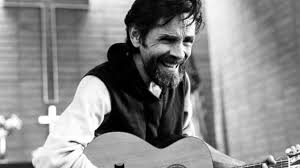
The project with the longest gestation period was a documentary film called Manson: Music From An Unsound Mind. It explores the musical aspirations that brought Charles Manson to Los Angeles with disastrous results. Before that, Manson lived in San Francisco, and the film includes some of my comments about the San Francisco counterculture. I watched the film on iTunes, but it's available on many other platforms.
The same crew (Prism Films) is also releasing a documentary about Altamont. I'm not sure about the release date but wouldn't be surprised if it lands in December, which is the concert's 50th anniversary. We did both interviews here at the house on the same day.
I also talked with Robert Scheer about Carey McWilliams and Ramparts magazine on his KCRW podcast. Over the years, Bob and I have talked extensively about Ramparts and his work there; this time it was especially gratifying to blend those reflections with some discussion of McWilliams and his achievement, especially but not only at The Nation magazine.
Finally, my continuing interest in Victor Arnautoff's murals at George Washington High School led to an interview with Christoph Droesser, who produced a piece for Swiss radio and a front-page article for Frankfurter Allgemeine. I continue to follow the larger story with interest and am glad the San Francisco school board has reconsidered its decision to destroy those murals. I learned about the issue from my colleague, Bob Cherny, who wrote a 2017 book about Arnautoff. I was alarmed by the board's claim that the murals glorified slavery and genocide. The opposite is true, but the claim seemed to justify the destruction. To my knowledge, no one has actually withdrawn that claim. We'll see where that goes from here.
Wednesday, May 01, 2019
More C-Mac Love

I also had a chance to speak about Carey McWilliams at the California Historical Society last night. It was a quick spin through his many accomplishments, but more and more, I'm also addressing why his work doesn't command more attention--especially given the tributes he has received from Kevin Starr, Mike Davis, Patricia Limerick, and many other experts. Truly, he's the most important American author that most people have never heard of.
Afterwards I went to Slim's to watch the rough cut of a documentary film about KSAN, the San Francisco counterculture's signature radio station. Many familiar faces there, including Bonnie Simmons, Ben Fong-Torres, Terry McGovern, and Scoop Nisker.
Monday, February 25, 2019
Pet Peeve Department

It's possible but unlikely that Swift found the quote somewhere besides my writing. If you search on the quote, you find only my stuff and his.
Not the end of the world by any means. But it's made worse somehow by the fact that the book was published by a right-wing imprint (Threshold Editions). That's the outfit that signed Milo Yiannopoulos for a $250k advance and then canceled the deal. It also published The Embassy House, which had to be withdrawn in 2013 when U.S. officials refuted the author's eyewitness account of the Benghazi incident. Most of the major trade publishers have right-wing imprints now, and I've seen some really dreadful stuff from that quarter.
Swift's book, however, received a positive review in the New York Times, where conservative author Thomas Mallon called it fair-minded and thorough. That may well be true, but I wonder.
Friday, January 25, 2019
The Return of C-Mac

My respect for McWilliams hasn't diminished a bit since I began the research more than 15 years ago. His brains, range, versatility, and classic prose style still floor me. And as I research Hunter Thompson's literary formation, McWilliams once again looms large. It was McWilliams, of course, who gave Thompson the idea for his story on the Hells Angels. After McWilliams ran it in The Nation, Thompson parlayed it into his first bestseller.
The good folks at Truthdig ran a Q&A on McWilliams and my longstanding interest in his achievement--often in the face of fierce resistance from formidable adversaries.
Tuesday, January 23, 2018
Wilentz Review of Arthur Schlesinger Jr. Bio

Wilentz concedes that Schlesinger's "actions in the early 1950s were not impeccable." Parenthetically, he mentions Schlesinger's campaign against an unnamed book editor (Angus Cameron), says it was disgraceful, and says that Schlesinger later regretted it. I would say that the campaign was despicable. It led right-wingers to label Little, Brown and Company a communist front, and it forced Cameron to resign as editor-in-chief. Cameron's crimes were turning down George Orwell's Animal Farm and publishing Howard Fast's Spartacus. (He also published The Joy of Cooking and Catcher in the Rye.) It took Cameron almost a decade to land an equivalent editorial position at Random House, where he specialized in cookbooks.
The Cameron episode wasn't unique. In his New York Post column, Schlesinger called Carey McWilliams and his colleagues "typhoid Marys of the left"--they weren't communists, but they spread the disease. At the time, McWilliams was editor of The Nation and one of Cameron's authors at Little, Brown.
Wilentz writes: "The rise of Senator Joseph McCarthy soon thereafter led to unjust charges that Schlesinger ... had abetted the rise of the Red Scare." But as Wilentz certainly knows, McCarthy was a latecomer. The probes, purges, and blacklists began in the late 1940s. Schlesinger's attacks did real and lasting damage when they were made.
In short, the claim that Schlesinger aided the Red Scare is just, and "not impeccable" doesn't begin to capture the damage that aid inflicted on real people's lives and careers. It may be true that Schlesinger was "alarmed by the witch hunts" and denounced red-hunters. But if he couldn't imagine the damage his attacks would have at the time, he was naive. Ironically, that's how he described McWilliams on the subject of international affairs.
Friday, January 15, 2016
Kathy Olmsted's "Right Out of California"

First, there's the primacy of California agribusiness, which Kathy casts as the state's political crucible. We all know about John Steinbeck, and some of us know about Carey McWilliams, but Kathy argues that the farm labor conflicts of that period actually led to the formation of modern conservatism. Specifically, those conflicts gave rise to the Associated Farmers, a powerful player in state politics. The AF's anticommunist activities, in turn, reached far beyond the fields and eventually touched Hollywood, the University of California, and other key institutions. Along the way, Kathy links the farm labor story to the LAPD Red Squads, Upton Sinclair's 1934 gubernatorial bid, the criminal syndicalism trials of Caroline Decker and Pat Chambers, and the rise of Richard Nixon and Ronald Reagan.
For me, the real pleasure of this book is watching California conservatism come into sharp focus. I already knew a fair amount about the key episodes, but I hadn't seen the larger pattern they formed. Much of this patterning hinges on Kathy's cast of characters. I learned a lot about Caroline Decker, for example, and Kathy is keen to point out the contributions other women made to the labor struggles of that decade. That Decker's Sacramento prosecutors benefited from AF funding and Red Squad testimony pulls together several important threads.
Kathy also has a lot to say about race. For example, she discusses John Steinbeck's decision to substitute white men for minorities (and women) when fictionalizing the actual events behind In Dubious Battle. Steinbeck's tremendous success reflected a painful truth: Americans cared about California farm labor abuses only when white Americans became its victims. Steinbeck probably understood that very well; either way, his decision is an important one to acknowledge in the classroom. Likewise, I appreciated Kathy's account of Langston Hughes's sojourn in Carmel. The local press reports of his visit display the racial hysteria that the Associated Farmers stoked at every turn.
If you don't believe Kathy's account on this score, I'd be happy to share the transcript of Carey McWilliams's closed-door testimony before the Committee on Un-American Activities in California. Much of that colloquy consisted of Jack Tenney quizzing McWilliams about his views on miscegenation. (McWilliams had recently written Brothers Under the Skin.) The committee never published McWilliams's testimony, but it did publish a characterization of it: his views on miscegenation, it turns out, were consistent with the Communist Party line. California legalized interracial marriage a few years later.
This has turned into a long post, so let me give you the short version: I highly recommend this book to anyone interested in California history or modern conservatism.
Sunday, May 31, 2015
Review of H.W. Brands's New Reagan Bio

Brands's portrait of Reagan resembles the one offered by Lou Cannon, who covered Reagan in both Sacramento and the White House. I interviewed Lou for my biography of Carey McWilliams and came away with huge respect--not only for the Reagan bios, but also for his work on the LAPD before, during, and after the Rodney King riots. Although Lou and I almost certainly differ in our assessment of Reagan and his legacy, much of what I know about Reagan I learned from Lou.
Lou also told me a story about his first book, which looked at Reagan and Jesse (Big Daddy) Unruh, the key Democrat in the state legislature and Reagan's opponent in the 1970 gubernatorial race. If memory serves, Lou wrote to several dozen public figures asking for interviews and general guidance. He heard back from precisely two: William F. Buckley and Carey McWilliams. Those two had a lot in common despite their different political orientations, and Lou felt, as I do, that it's important not to let ideological differences blot out such similarities.
Friday, July 15, 2011
Theodore Roszak RIP
 We lost another important California writer this week: Theodore Roszak, author of The Making of a Counter Culture. He was 77.
 As his obituary notes, that book began as a series of articles for The Nation. It doesn't mention his editor, Carey McWilliams, who helped him develop the work. Professor Roszak, who met McWilliams only once in 1964, told me that he considered McWilliams a gentle, friendly, avuncular, and remarkably generous older man who listened carefully and astutely assessed his strengths and weaknesses.
Like many Nation contributors, Professor Roszak was grateful for McWilliams's hands-off editorial style. "He didn't intervene, interfere, or climb all over the work," Roszak recalled. Instead, McWilliams supported him and let him develop his thesis in a four-part series. "It was exactly what I needed at the time," Roszak told me. The series formed the core of his 1969 landmark book, which coined the term counterculture.
I'm sorry to say I never met Professor Roszak in person, even though he lived in Berkeley and taught at Cal State East Bay. But I was grateful for his time when I interviewed him on the telephone for the McWilliams biography. And I'm even more grateful for his important contribution to our understanding of the Bay Area in the 1960s.
Saturday, July 09, 2011
Catherine Mulholland RIP
 Catherine Mullholland passed away this week. Her grandfather, William Mulholland, built the Los Angeles Aqueduct and was the subject of her 2000 biography, published by UC Press. She was 88.
Carey McWilliams figures in her obituary, which requires a quick clarification. McWilliams doesn't say or suggest that William Mulholland was in cahoots with the business syndicate behind the Owens Valley water caper. McWilliams does, however, call Mulholland "the engineer responsible for the Owens Valley fiasco" (Southern California, p. 191).
I can see why Catherine Mulholland was "sobered and perplexed" by McWilliams's account, which one of her teachers recommended to her. And though I can also see why she objected to Chinatown, which was based on McWilliams's work, the obituary is slightly misleading on this point as well. In the film, the character of Hollis Mulwray essentially plays her grandfather. But Mulwray is by no means a villain or unsympathetic character. To the contrary, he's one of the chief victims of his father-in-law's ruthlessness.
Catherine Mulholland spent most of her final years discussing her grandfather's work and legacy. I'm certainly not the only person who welcomed the publication of William Mulholland and the Rise of Los Angeles. It received favorable notices in both the New York Times and the Los Angeles Times, which also named it the best nonfiction book of the year.
Monday, February 28, 2011
Southern California
 This morning I came upon an adroit piece in the Los Angeles Times on Carey McWilliams's Southern California: An Island on the Land. The article, by Christopher Hawthorne, is part of a Reading L.A. project that began with books by Morrow Mayo and Louis Adamic. (McWilliams knew both men and was especially close to Adamic.)
 I left a comment on the L.A. Times' website, but I forgot to add my favorite point about this book, which is that it directly inspired Robert Townes's Oscar-winning original screenplay for Chinatown.
Wednesday, September 08, 2010
American Taliban and the Politics of Cool
 I just heard from Nancy McWilliams, Carey McWilliams's daughter-in-law. She was kind enough to send me two of Carey's books (Ill Fares the Land and Louis Adamic & Shadow America) from Iris McWilliams's library. That means a lot to me.
 I've been thinking about Carey McWilliams for other reasons as well. Much of that has to do with the reception of Markos Moulitsas's American Taliban, which compares some American conservatives to their Islamist counterparts. (I acquired the book for PoliPointPress.) Jamelle Bouie, a young reviewer at the American Prospect, rejected the premise of the book, claiming that a) American liberals should leave hyperbole to conservatives, and b) that conservatives haven't gained politically from their rhetorical tactics.
Digby and Hunter refudiated those claims, and I cited a Robert Kuttner article in the American Prospect that made some of the same points as Markos while reviewing Max Blumenthal's Republican Gomorrah. (In fact, Kuttner's article is titled "American Taliban.") Evidently, it's OK for Bob Kuttner to deploy that term in the American Prospect, but when Markos explores it, he gets a lecture.
Naturally, conservative critics (and some liberal ones) have touted the review in an effort to dismiss the book, but the online commentators overwhelmingly support Markos and make some interesting points of their own.
What to do about tone, especially when political passions are running high? When I gave the Bonnie Cashin lecture at UCLA, I spoke admiringly about McWilliams's style and "the politics of cool." I said he was a classic stylist in the sense described by Francis-Noel Thomas and Mark Turner in Clear and Simple as the Truth. "Hyperbole is useful in some situations," I noted, "but the classic stylist renounces it. The readers he imagines don't need it, and resorting to tricks would only diminish his hard-earned credibility."
I then asked: "Is there an audience for this style in the age of sound-byte politics, overheated talk radio and blogs, and hyper-theorized scholarship?" The answer is yes, but that audience is a small, elite one. Probably very much like the American Prospect's. "Elite" here doesn't mean you can't join that group; anyone who subscribes to the tenets of critical analysis is welcome. But that community in America, Carey once told Victor Navasky, consists of about 250,000 souls.
The politics of cool, I continued, often holds up well over time but isn't very responsive to the passions of the day, and this limits its intellectual reach as well as its appeal. McWilliams didn't feel in his guts what other Americans did--for example, the fear and resentment of those who voted for Nixon twice. And that meant he couldn't quite fathom the political implications of those emotions. At first he thought Nixon had fooled voters. Later in life, he realized that Americans had understood Nixon perfectly. The times called for a bastard, and Nixon fit the specifications. That's the scarier thought, and I think Bob Kuttner understands its applications today.
Two of McWilliams's books were more polemical: Factories in the Field and Witch Hunt. The first took on farm labor in California and remains one of his classics. It appeared in 1939, during the Great Depression and while European fascism was expanding in force. McWilliams had already traced the links between what he called "farm fascism" and its continental counterpart. Witch Hunt: The Revival of Heresy, which examined the onset of McCarthyism, appeared in 1950, too soon for most Americans to see the links between the persecution of Communists and earlier heresy trials. Arthur Miller's The Crucible came later (1953) and has been the touchstone ever since. Carey later admitted that he got carried away with the historical parallels, and the book never caught on. But in both books, Carey linked an American political vice (labor exploitation, McCarthyism) to something creepy and obviously un-American (fascism, hysterical persecutions).
I'm not sure there are any hard-and-fast rules here, but I agree with Kenneth Burke's point that tolerance, a classic liberal virtue, is an inadequate response to rabid intolerance. And as I've aged, I've been struck by the limits of logical argumentation alone in American public life. I wish that kind of high-minded exchange mattered more, but in this culture, overshooting the mark is sometimes the best way to hit it. Hyperbole is a matter of raising the subject excessively, and we often need it to start or reframe a particular conversation. The American right, by the way, understands this idea very well and has been using it to advantage at every turn.
Wednesday, July 14, 2010
RIP, Iris Dornfeld McWilliams
Iris Dornfeld McWilliams, Carey's widow and the author of two young adult novels, died on July 7. She was 97.
Steve Cooper, who interviewed Iris for his John Fante biography, was the first to contact me about her passing. This morning I also heard from Katrina vanden Heuvel, who met Iris as a Nation intern. Katrina has since become the magazine's publisher, but one of her first jobs was organizing Carey's papers for the Bancroft and UCLA libraries. Katrina will say a few words at a small ceremony for Iris in New York City tomorrow.
Iris was ailing when I met her at the apartment near Columbia University in the summer of 2003. We had a telephone conversation before that, too, and she was very helpful. Her conversation was bold and insightful, and I can see why Patty Limerick was impressed by her outspokenness. When I visited Iris in the apartment, her main concern was that I was having fun with the biography of her husband. Very sweet.
One thing I learned by reading Carey's diaries: he was very devoted to her. When he was first diagnosed with cancer, his first thoughts were for her. "I came back by way of the Y--stunned: hating to report this to Iris. And dear God I do worry about her! The whole situation in Los Angeles in a mess. Her mother to watch. And her own health--her eyes. I'm beside myself with concern" (Jan. 17, 1978). And she returned that devotion.
They went through a lot together. Their courtship began while he was serving in California state government. She grew up with Joyce Fante, wife of novelist and screenwriter John Fante, one of Carey's close friends. Joyce and John spent lots of family time in the Sacramento area and arranged the first date. (Iris was living in Susanville at that time.) Iris and Carey hit it off right away, and they married in Yuma, Arizona, in the fall of 1941. Their son Jerry was born in October 1942.
Those years were productive for him but also tough in other ways. The Committee on Un-American Activities in California (a.k.a. the Tenney Committee) was pestering him--I have an unreleased transcript of an amazing closed-session exchange--and some legislators even managed to zero out his department's budget because of his politics. (Governor Olson pocket-vetoed the bill.) But he and Iris got through it and, despite his attachment to Los Angeles, they decided to move to NYC so he could work full-time for The Nation. That was 1951.
After some initial resistance, she embraced the city, and they enjoyed their lives there. Bernard Nossiter said their apartment "was a wonderful oasis in those days. The intelligent and decent civil liberties types all drifted in, and as discouraging as the country seemed, the possibilities of an open and sane society seemed alive there."
In the 1970s, after Carey retired as editor, they contemplated a return to Los Angeles, where they still owned a home on North Alvarado. He taught for a semester at UCLA, but in the end, they decided to stay in NYC. (Two words: rent control.)
They raised Jerry in NYC and frequently hosted Carey's son from his first marriage--Wilson Carey McWilliams, also known as Carey, who finished his career teaching political science at Rutgers. After Carey Sr. died in 1980, and Jerry died of AIDS in 1990, Carey Jr. looked after Iris until his own recent death.
Iris and Carey had come a long way from their origins. She started out in rural Northern California, the daughter of a railroad worker and music teacher, then studied music at Mills College in Oakland. She taught music at Lassen Union High School, more than 150 miles north of Sacramento. He started out in the Rocky Mountains, riding to school on horseback past the saloons and such. So ending up in NYC--"vertical living," as Carey called it--surrounded by writers, labor activists, intellectuals, artists and such was quite a journey for both of them.
RIP, Iris.
Steve Cooper, who interviewed Iris for his John Fante biography, was the first to contact me about her passing. This morning I also heard from Katrina vanden Heuvel, who met Iris as a Nation intern. Katrina has since become the magazine's publisher, but one of her first jobs was organizing Carey's papers for the Bancroft and UCLA libraries. Katrina will say a few words at a small ceremony for Iris in New York City tomorrow.
Iris was ailing when I met her at the apartment near Columbia University in the summer of 2003. We had a telephone conversation before that, too, and she was very helpful. Her conversation was bold and insightful, and I can see why Patty Limerick was impressed by her outspokenness. When I visited Iris in the apartment, her main concern was that I was having fun with the biography of her husband. Very sweet.
One thing I learned by reading Carey's diaries: he was very devoted to her. When he was first diagnosed with cancer, his first thoughts were for her. "I came back by way of the Y--stunned: hating to report this to Iris. And dear God I do worry about her! The whole situation in Los Angeles in a mess. Her mother to watch. And her own health--her eyes. I'm beside myself with concern" (Jan. 17, 1978). And she returned that devotion.
They went through a lot together. Their courtship began while he was serving in California state government. She grew up with Joyce Fante, wife of novelist and screenwriter John Fante, one of Carey's close friends. Joyce and John spent lots of family time in the Sacramento area and arranged the first date. (Iris was living in Susanville at that time.) Iris and Carey hit it off right away, and they married in Yuma, Arizona, in the fall of 1941. Their son Jerry was born in October 1942.
Those years were productive for him but also tough in other ways. The Committee on Un-American Activities in California (a.k.a. the Tenney Committee) was pestering him--I have an unreleased transcript of an amazing closed-session exchange--and some legislators even managed to zero out his department's budget because of his politics. (Governor Olson pocket-vetoed the bill.) But he and Iris got through it and, despite his attachment to Los Angeles, they decided to move to NYC so he could work full-time for The Nation. That was 1951.
After some initial resistance, she embraced the city, and they enjoyed their lives there. Bernard Nossiter said their apartment "was a wonderful oasis in those days. The intelligent and decent civil liberties types all drifted in, and as discouraging as the country seemed, the possibilities of an open and sane society seemed alive there."
In the 1970s, after Carey retired as editor, they contemplated a return to Los Angeles, where they still owned a home on North Alvarado. He taught for a semester at UCLA, but in the end, they decided to stay in NYC. (Two words: rent control.)
They raised Jerry in NYC and frequently hosted Carey's son from his first marriage--Wilson Carey McWilliams, also known as Carey, who finished his career teaching political science at Rutgers. After Carey Sr. died in 1980, and Jerry died of AIDS in 1990, Carey Jr. looked after Iris until his own recent death.
Iris and Carey had come a long way from their origins. She started out in rural Northern California, the daughter of a railroad worker and music teacher, then studied music at Mills College in Oakland. She taught music at Lassen Union High School, more than 150 miles north of Sacramento. He started out in the Rocky Mountains, riding to school on horseback past the saloons and such. So ending up in NYC--"vertical living," as Carey called it--surrounded by writers, labor activists, intellectuals, artists and such was quite a journey for both of them.
RIP, Iris.
Friday, July 02, 2010
Summer Reading
 Gustavo Arellano appeared on Marketplace yesterday and offered a choice summer reading recommendation: Carey McWilliams's Southern California: An Island on the Land. Gustavo describes it as "the best guidebook to our twisted, mysterious paradise." Amen.
Fanatical readers of this blog will recall that McWilliams's classic also inspired Robert Towne's original screenplay for Chinatown. Need I go on? I didn't think so.
Thursday, April 29, 2010
The Zocalo Event
 Yep, that's me in a necktie, carrying on. Joe Mathews of the New America Foundation asked me to participate in a discussion about California: specifically, whether it would be better off as a separate country (!) That's Joe on the right, and Abe Lowenthal (far left), David Dayen, and Darry Sragow.
 I wasn't sure what my contribution would be, but Joe encouraged me to focus on what Carey McWilliams might have said about that question. Which I did, but as my earlier post indicated, I also added a few comments about the key issue where California has acted like a sovereign state: namely, marijuana use.
As I told the Zocalo people, I really like the way they run their business. They're well organized but keep it fun at the same time--a rare combination.
Monday, January 11, 2010
Alice McGrath's Memorial in Ventura
 I missed Alice McGrath's memorial party in Ventura, but my daughter Ashley, who met Alice last year, said it was very inspiring. The turnout was predictably great, with heavy representation from the legal community, which held her in great respect for her work dating back to the Sleepy Lagoon trial in the 1940s. That's when she met Carey McWilliams, who changed her life.
 I met Alice while working on the McWilliams bio, and I saw her often after that. What a pistol. I'm so glad I met her, and though I'm sad she's gone, I'm thrilled that her life was celebrated by (many of) the people whose lives she touched.
Friday, January 08, 2010
The Nation and the FBI
 I've been talking a lot about Ramparts and its CIA saga, but I'm glad Richard Lingeman has returned our attention to an earlier row between the FBI and The Nation. Lingeman's article, "The File's Tale," shows how the FBI responded to Fred Cook's investigation of the bureau in 1958. Not pretty.
 In fact, The Nation under Carey McWilliams shared many of Ramparts' virtues, but their styles were quite different. If Ramparts was a thoroughbred, The Nation was a workhorse, churning out its weekly on a modest budget to a smaller audience. McWilliams was incapable of Warren Hinckle's extravagance, but he turned a journal of opinion into a forum for investigative journalism and shepherded the magazine through the McCarthy era, its most difficult period.
Monday, November 23, 2009
Pamuk and McWilliams
 I enjoyed Lewis MacAdams's piece on Nobel Prize-winning novelist Orhan Pamuk's stroll through downtown Los Angeles. Evidently, Pamuk relished Carey McWilliams's inscription in Pershing Square. "This is the only city I've been in," he laughed delightedly, "where a guy writes horrible things about the town and the town is so proud of him they put his quote in the park!"
Thursday, November 05, 2009
Gustavo on C-Mac--and Orange County
 Carey McWilliams has many fans, but few are more ardent--and productive--than Gustavo Arellano.
 Gustavo's latest contribution to Gunkist Memories notes that McWilliams continues to outperform Orange County historians, especially when it comes to the 1936 citrus strike and the even more consequential Mendez vs. Westminster decision, which McWilliams said might "sound the death knell of Jim Crow in education."
Saturday, January 24, 2009
Joe Mathews on Carey McWilliams

It's a double serving of McWilliams today in the Los Angeles Times. I touch on him in my review of the Mary Austin bio, and an article by Joe Mathews--New America Foundation fellow and former Times scribe--puts the state's current fiscal crisis in historical perspective by reading it against McWilliams's California: The Great Exception (1949). Very nicely done.
Subscribe to:
Posts (Atom)